
115 years of strengthening accountability in South Africa
A legacy built on independence, integrity and public trust
In 2026, the Auditor-General of South Africa (AGSA) marks 115 years of existence and public auditing and for a better South Africa. This milestone reflects more than longevity, it is a story of an institution that has consistently evolved to protect the public interest, strengthen democracy, and build confidence in how public resources are managed.
Established on 12 May 1911, the Office of the Controller and Auditor-General was founded at an important moment in South Africa’s history, with a clear mandate to safeguard public funds and promote accountability. From its earliest days, the institution was anchored in the principles of independence, integrity and impartiality, values that continue to define the AGSA today.
From foundation to constitutional pillar
For over 115 years, the AGSA has journeyed alongside South Africa’s social, political and economic transformation. From a small audit office in the Union of South Africa to a constitutionally independent Chapter 9 institution, the AGSA has adapted its role, tools and reach to remain relevant in a changing governance landscape.
Today, the AGSA is recognised nationally and internationally as a trusted guardian of public accountability, providing assurance on the use of public resources and enabling effective oversight by Parliament, legislatures and citizens.
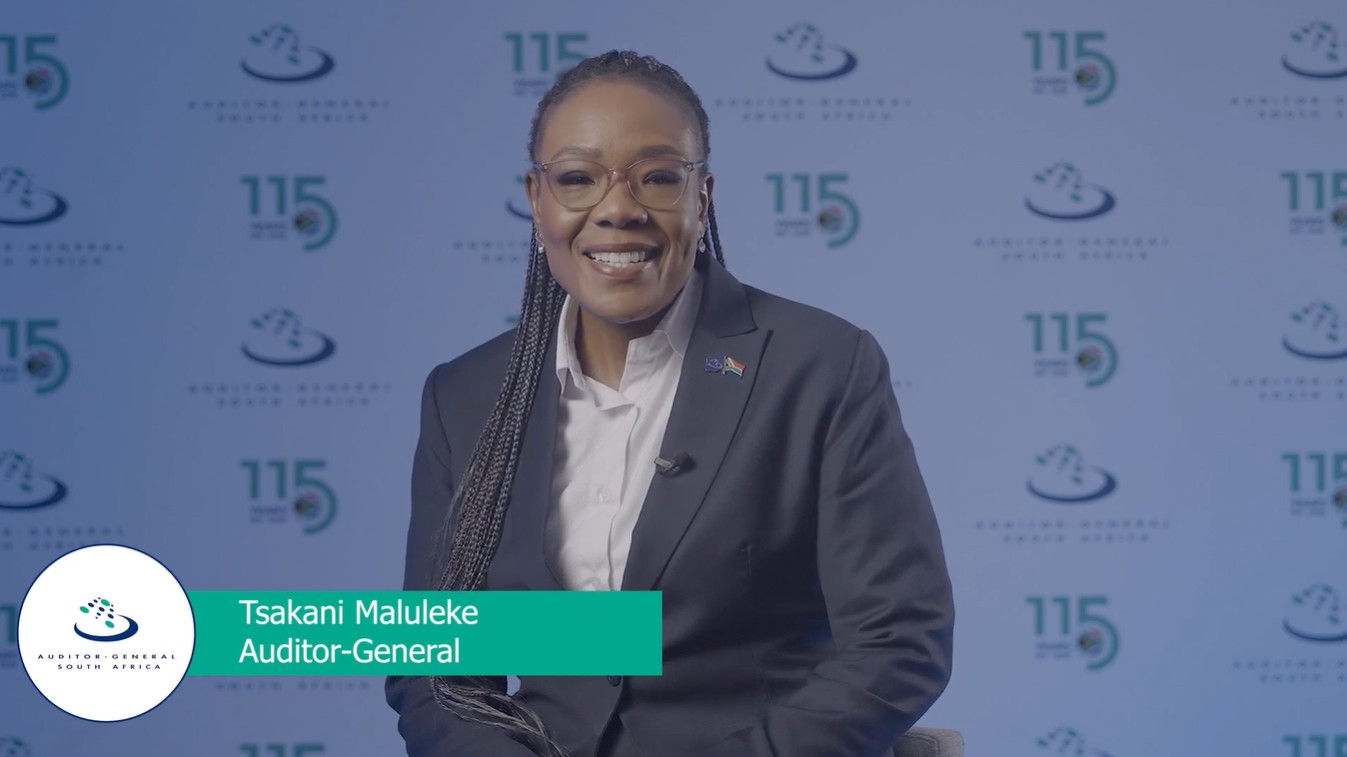
AG's message: Celebrating 115 years of building public confidence
Nations are as strong as the institutions that make them. This is because institutions are designed to be resilient in the face of challenges and to continue executing their mandates for the benefit of citizens. One of these institutions, the Auditor-General of South Africa (AGSA), marks an important milestone: 115 years of existence and service to the people of South Africa.
On 12 May 1911, exactly 115 years ago the national audit office, then known as the Controller and Auditor-General, opened its doors. Today, in the democratic South Africa, it is established as an institution that supports our country’s democracy; and is the only institution with a constitutional mandate to audit and report on the use of public funds by government, Parliament, legislatures, municipalities and their entities.
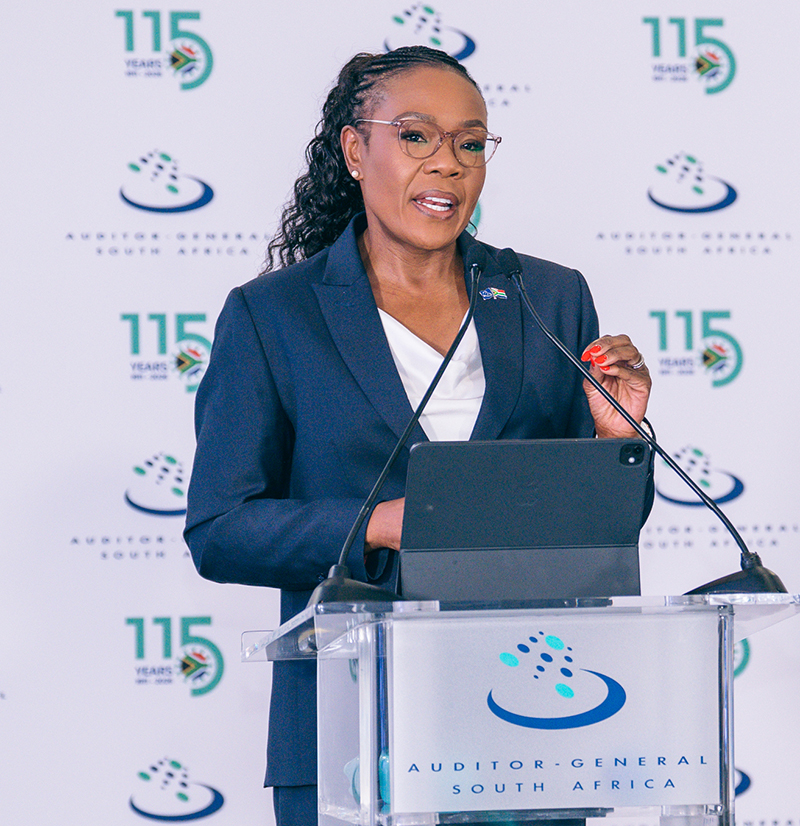
A legacy timeline: 115 years in perspective
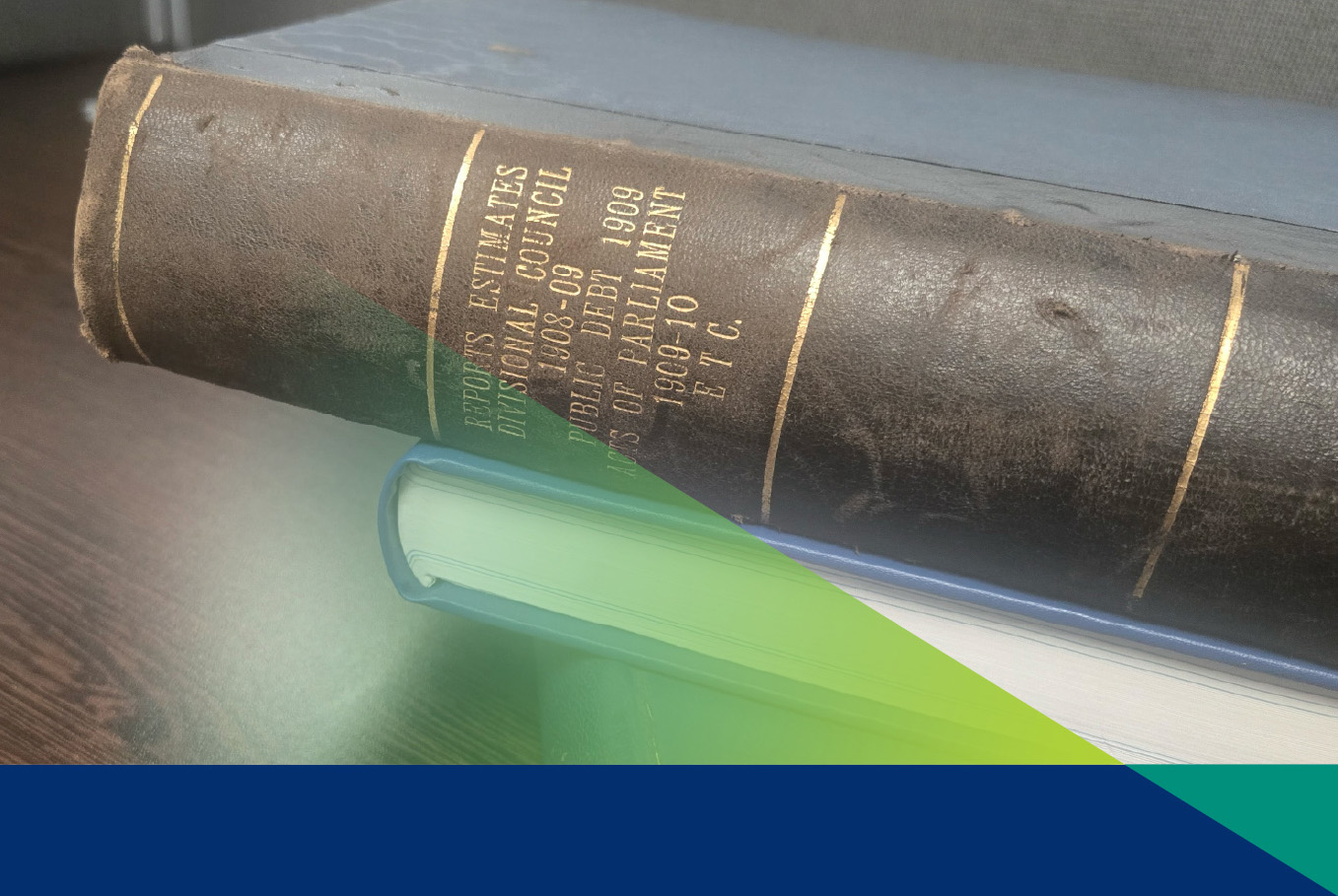
1911
The beginning
Establishment of the Office of the Controller and Auditor-General under the Exchequer and Audit Act. The foundations of public auditing in South Africa are laid, with early emphasis on financial discipline and stewardship of public funds.

1930s–1970s
Laying the groundwork
The institution develops audit standards, professional practices and a culture of diligence, navigating economic depression, war, and administrative expansion while maintaining independence and credibility.

1989–1996
The journey to independence
Legislative reforms and global best practice shape a new era. The Auditor-General Act and South Africa’s democratic Constitution entrench the AGSA’s independence, firmly positioning it as an officer of Parliament.

1999–2006
Modernising public auditing
The Public Finance Management Act (PFMA) and Municipal Finance Management Act (MFMA) transform public sector accountability. The AGSA expands its scope to include performance information, governance and compliance.

2010–2018
Stakeholder engagement and improved reporting
The AGSA strengthens its impact through clearer reporting, stakeholder engagement and the introduction of the material irregularities process, enabling consequences for serious failures in public administration. This is further enabled through the Public Audit Amendment Act 5 of 2018.

2019–Present
Impact, insight and accountability
The Public Audit Amendment Act 5 of 2018, effective 1 April 2019, empowered the AGSA to act on material irregularities (MIs). It enhanced accountability by allowing the AGSA to refer irregularities for investigation, issue remedial actions, and issue binding certificates of debt to recover financial losses.

Auditing with purpose
At the heart of the AGSA’s 115-year legacy is a clear purpose: to strengthen democracy through accountability. Every audit report, finding and recommendation is aimed at improving governance, service delivery and the lives of South Africans.
By shining a light on how public funds are managed, the AGSA empowers oversight bodies and citizens to demand ethical leadership, transparency and value for money.
Our people
Carrying the legacy forward
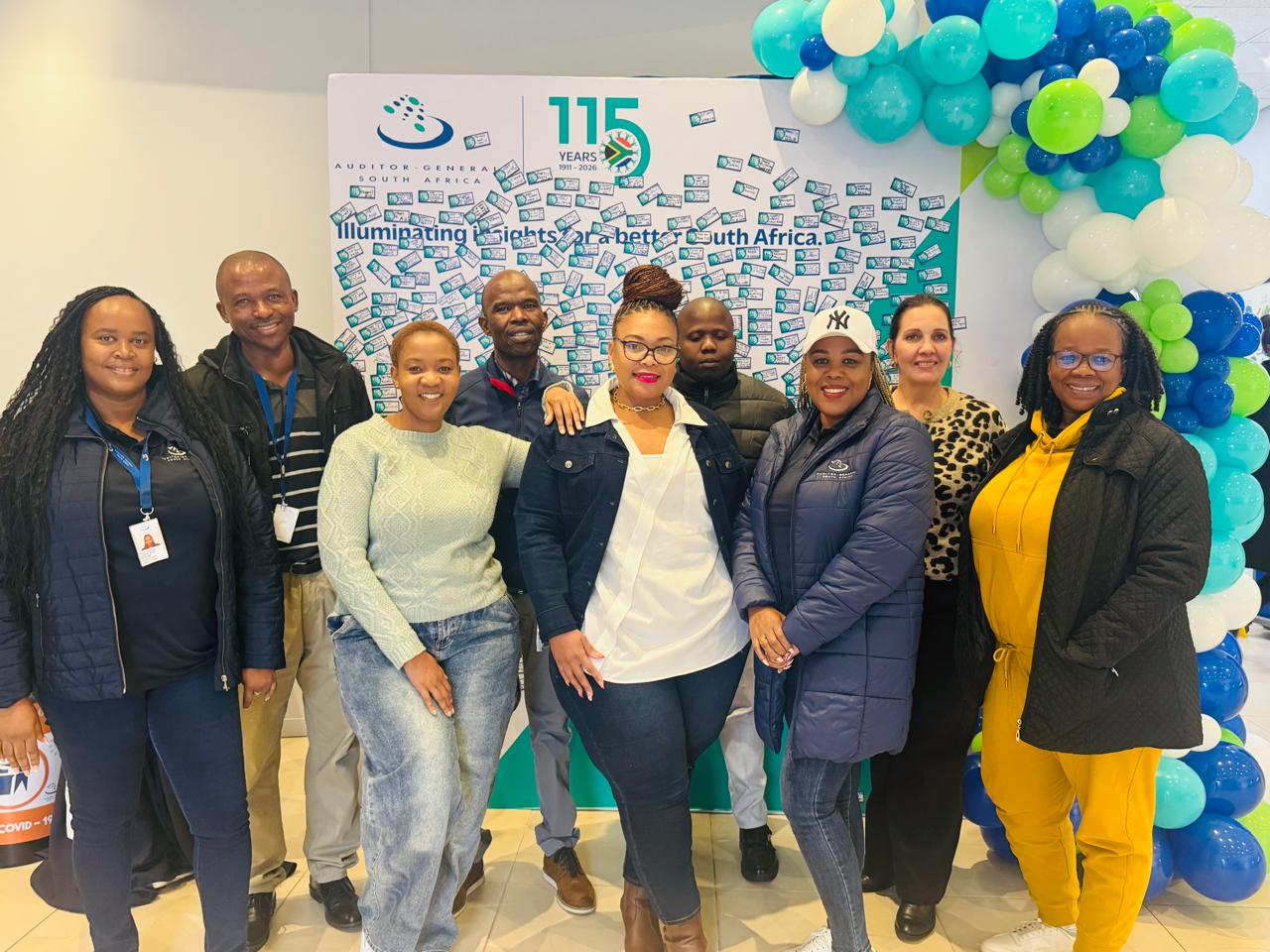
Behind the institution are generations of professionals who have chosen public service with purpose. Auditors, engineers, specialists and trainees across the country continue to uphold the values that have sustained the AGSA for over a century.
Working at the AGSA is more than a career, it is a commitment to integrity, courage and service to the nation.
Looking ahead
As South Africa continues to face complex governance and service delivery challenges, the AGSA remains steadfast in its role. Building on 115 years of experience, the institution is focused on deepening impact, strengthening accountability and contributing to a capable, ethical and developmental state.
115 years on, the mission remains unchanged: to protect the public interest and build confidence in public sector accountability, today and for generations to come.