

Latest stories
AG calls for women leaders to drive lasting impact at Annual Women's Dialogue
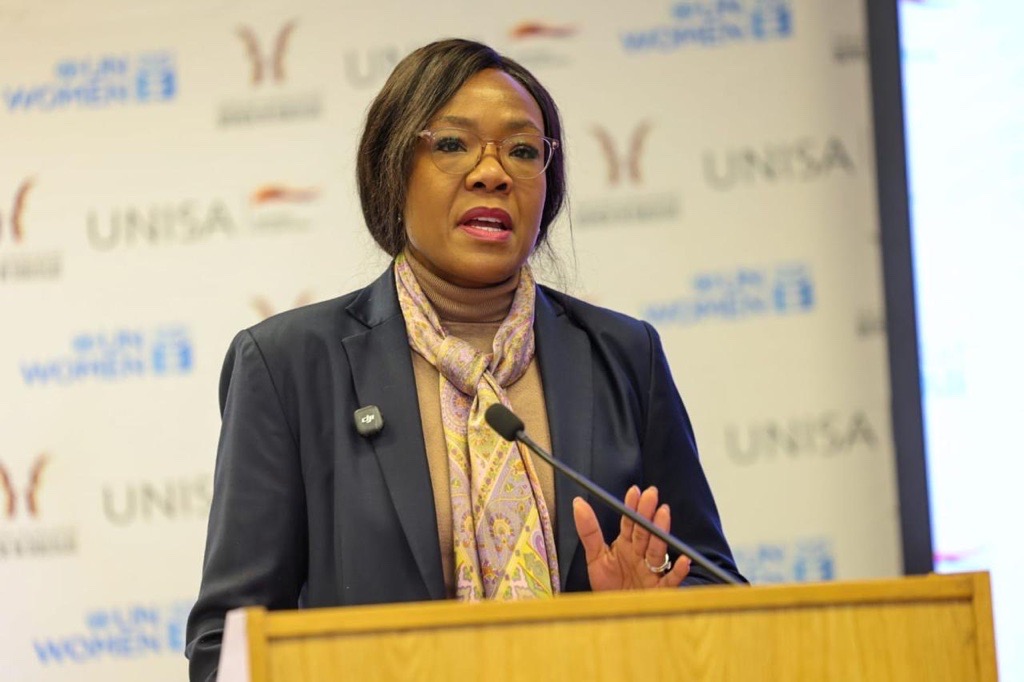
AG Tsakani Maluleke recently delivered a keynote address at the 2026 Annual Women's Dialogue, hosted by the South African Women in Dialogue, in collaboration with the University of South Africa and United Nations Women.
Addressing delegates under the theme, From representation to impact: The role of women leaders in building ethical and accountable institutions: Lessons from the Women 20 (W20), the AG reflected on the responsibility of women leaders to use their positions to create meaningful and lasting change in society. The W20 is the Group of 20’s (G20) gender advisory group on women’s economic empowerment.
The dialogue brought together women leaders, policymakers, academics and stakeholders to explore how women's leadership can strengthen ethical, accountable, and inclusive institutions while advancing gender equality.
In her address, the AG paid tribute to the women of 1956, whose courage and determination continue to inspire generations of South African women.
She encouraged delegates to honour their legacy, not only through remembrance, but by creating their own legacy of impact for future generations.
"Leadership positions are opportunities to make a difference, to 'lift as we rise', as Charlotte Maxeke urged, and to use education as a tool of liberation," she said.
The AG also acknowledged the women leaders who paved the way for today's generation, recognising their contribution to expanding opportunities and representation for women across different sectors.
Drawing from the AGSA’s own experience, she highlighted the institution's commitment to advancing women in leadership and the auditing profession. Through its Saica-accredited auditors' training programme, the AGSA continues to create opportunities for young professionals to develop critical skills and contribute meaningfully to society.
The programme produces more than 300 chartered accountants annually, with the majority being black women. This demonstrates the AGSA’s commitment to transformation and empowerment within the profession.
AG Maluleke also pointed to the AGSA’s own leadership structure as evidence of deliberate efforts to advance women. Today, both the AG and DAG positions are occupied by women, reflecting the vision of successive leaders who recognised the importance of representation and intentional change.
Turning to the global agenda for gender equality, the AG highlighted the recommendations presented by the W20 to G20 leaders in 2025. These recommendations called for stronger commitments to financing gender equality, improving the collection of disaggregated data and strengthening accountability for gender mainstreaming across public institutions.
They also set ambitious targets to reduce the female labour force participation gap, gender wage gap and unpaid care gap by 35% by 2035.
AG Maluleke urged leaders and stakeholders to ensure that these commitments do not remain aspirations on paper but are translated into tangible action.
"They may be delayed, but they must not be denied," she said, calling on all sectors of society to continue advocating for implementation and holding leaders accountable for progress.