Media statements
Limited progress made by the outgoing local government administration to strengthen governance and improve service delivery
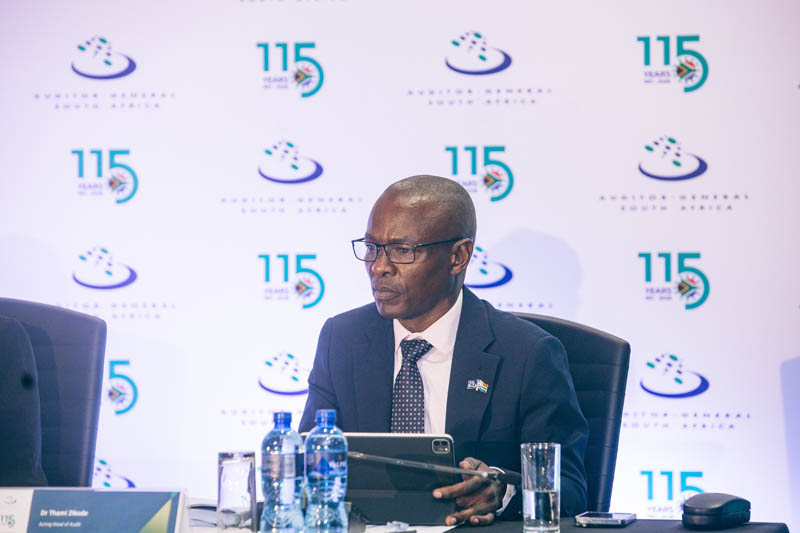
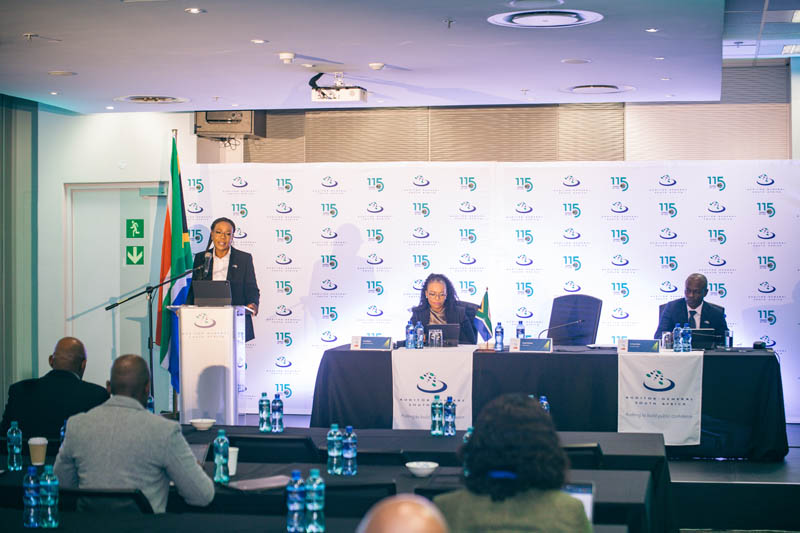
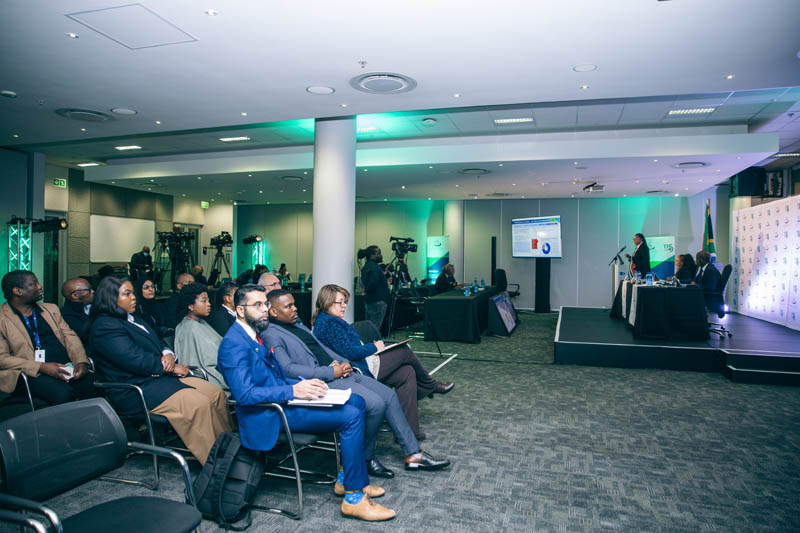
PRETORIA – Auditor-General (AG) Tsakani Maluleke today reported that limited progress has been achieved since the 5th administration, and the state of South Africa’s local government remains concerning, as the outgoing 6th administration did not achieve the desired improvements. The AG reported on the audit outcomes of local government for the 2024-2025 financial year during the tabling of the 2024-25 general report in Parliament.
The AGSA is required to conduct audits and report independently, consistent with the Constitution and the Public Audit Act (PAA). Section 188 of the Constitution requires the auditor-general to audit and report on the financial management of municipalities to promote accountability. Section 20 of the PAA further requires the auditor-general to provide independent assurance that municipalities and their entities manage their finances in accordance with sound financial principles, comply with the laws that apply to them, and report credible information on the achievement of their financial and performance objectives.
We conduct the audit of financial statements, compliance with applicable legislation, and predetermined objectives to provide assurance that public resources are managed efficiently, effectively and responsibly, while we assess whether the procurement of goods and services that enable service delivery is undertaken in accordance with relevant legislation and regulatory requirements. Municipalities are important and constitute the sphere of government closest to citizens and are primarily responsible for delivering essential services that directly affect the quality of life of local communities.
In the general report, Maluleke states that: “Over the past four years, mayors and councils of the 6th administration have made limited progress to strengthen governance and improve service delivery, as residents and businesses continue to experience unreliable service delivery, environmental hazards and deteriorating infrastructure. They further oversaw municipalities with deteriorating financial health.”
Among others, this limited progress is evident in that only 39 municipalities (15%) achieved clean audits. These municipalities collectively administer R52,60 billion, which constitutes approximately 8% of the total local government expenditure budget.
Also, 38 municipalities (15%) representing 24% of the total local government expenditure budget have regressed since 2020-21, including municipalities that previously achieved clean audits and three metros.
The audit outcomes and performance of the eight metros continue to decline, affecting the daily lives of millions of people.
Some positive shoots
The AG reported “some positive shoots, notably, a substantial reduction in the number of municipalities with repeat disclaimed audit opinions, which are the lowest we have reported in years. There is a significant increase in unqualified audit opinions (meaning that the published financial statements are credible) to 61% in 2024-25, similar to a level last reached in the 2015-16 financial year). There is also a marked improvement in the timely submission of financial statements, which is at 98%, the highest level in our records”. She further says these gains are a direct result of enhanced executive and administrative support from national and provincial governments and effective oversight by parliament and provincial legislatures.
“It is encouraging that municipalities, as well as national and provincial governments, paid attention to our messages over the years to collaborate with the aim of driving timely submission of financial and eradicating disclaimed audit opinions.”
Contributing to the improvement in submissions and disclaimers was the implementation of the AGSA’s material irregularity (MI) process.
Good governance, oversight efforts
Maluleke acknowledged the efforts aimed at improving governance in this critical tier of government, among others, the increased oversight efforts by parliamentary committees – the Standing Committee on the Public Accounts and the Portfolio Committee on Cooperative Governance and Traditional Affairs.
To turn around the current concerning state of local governance, the AG says, “these commendable efforts need to be doubled and replicated with all accountability ecosystem roleplayers steadfastly delivering on their respective mandates”.
State of local government at a glance
Persistent poor audit outcomes with concerning regressions
The AG reported that the local government audit outcomes were in a bad state at the conclusion of the term of the 5th administration. During the 6th administration’s term, the rate of timely submission of financial statements improved, the number of disclaimed audit opinions was significantly reduced, the number of auditees that published credible financial statements (receiving an unqualified audit opinion on their financial statements) increased. There was a net improvement in the audit outcomes for the different categories of municipalities, except the metros, which regressed.
During the period under review (2024-25), 145 municipalities (57%) obtained the same audit outcome as in 2020-21, the final year of the 5th administration. Nevertheless, 15% of municipalities, representing 24% of the total local government budget, regressed since 2020-21, including municipalities that previously achieved clean audits and three metropolitan municipalities.
“Regressions in audit outcomes should be a rare occurrence, particularly in the absence of significant changes to legislation or reporting requirements.”
The 72 municipalities (28%) that have improved since 2020-21 were responsible for 13% of the total local government expenditure budget – 11 of the improvements were to a clean audit and 38 to an unqualified audit opinion with findings (from qualified, adverse or disclaimed opinions).
The number of municipalities receiving disclaimed audit opinions declined from 29 in 2020-21 to (8) eight in 2024-25.
KwaZulu-Natal, Limpopo and Mpumalanga successfully eradicated disclaimed audit opinions entirely, while North West reduced the number of such opinions from nine to one since 2020-21.
Other than Kamiesberg, which regressed from a qualified audit opinion to a disclaimed audit opinion in 2024-25, seven municipalities continued to receive disclaimed opinions for periods ranging from three to 10 years. These seven ‘repeat disclaimers’ are in the Free State (three), Eastern Cape (two), North West (one) and Western Cape (one). These audit outcomes are primarily attributable to inadequate institutional capability and governance deficiencies within the accountability ecosystem.
A disclaimed audit opinion is the worst audit outcome that a municipality can receive, as it means that we could not obtain adequate evidence for most of the information reported in its financial statements. The lack of transparency regarding the utilisation of public funds and the delivery of municipal services substantially weakens accountability, which often leads to residents being deprived of basic services and harmed by the municipalities’ actions or inaction.
The most prevalent outcome in 2024-25 was an unqualified audit opinion with findings.
Most of the 117 municipalities in this category received an unqualified opinion only after correcting misstatements that were identified during the audit process. These municipalities demonstrated persistent material non-compliance, significant deficiencies in financial and performance reporting, and inadequate accountability and consequences.
These municipalities, collectively, accounted for 45% of local government irregular expenditure, 37% of unauthorised expenditure, 30% of fruitless and wasteful expenditure and 31% of MIs.
Despite the risks associated with their continuing underperformance, most of these auditees have demonstrated limited commitment to attaining clean audit outcomes. A total of 43 auditees (37%) remained in the unqualified audit opinion with findings category for between two and four consecutive years, while 24 municipalities (21%) have done so for periods ranging from five to nine years, and 20 municipalities (17%) for at least a decade.
“This complacency, in part, is due to accounting officers and political leaders misconstruing an unqualified audit opinion with findings as a good audit outcome and not a stepping stone towards a clean audit.”
Unreliable financial information and poor financial management practices contribute to financial distress and pressure on the fiscus
Submission of financial statements
Financial statements submission improved significantly in 2024-25. However, five municipalities in the Free State, Northern Cape and North West did not submit their financial statements for auditing by the legislated date due to capacity and system challenges, which were not appropriately and timeously dealt with by the accounting officer, mayor and council.
By 30 April 2026, the cut-off date for inclusion in the AGSA’s report, the audits of two municipalities in the Free State, namely Nala and Maluti-A-Phofung, had not been completed due to the late submission and the non-submission of financial statements, respectively. The audit of Nala Local Municipality was subsequently completed by 31 May 2026, with a qualified audit opinion.
Financial reporting remains compromised
The credibility of municipal financial reporting remains compromised. In 2024-25, 99 municipalities (39%) received modified opinions. A total of 195 municipalities (76%) submitted financial statements for auditing that contained material misstatements. Without the corrections that we permitted during the audit, only 24% would have received unmodified opinions – compared to the 61% that ultimately did.
Accountability and decision-making weakened by poor quality of performance reports
In 2024-25, all municipalities prepared and submitted performance reports for auditing, which is a meaningful milestone. In the 2023-24 general report, we reported that the only remaining municipality that had not prepared performance reports (for 15 years) was Renosterberg (Petrusville) in the Northern Cape. In response to an MI notification we issued in April 2024, the municipality prepared and submitted, for the first time, a performance report for auditing. However, the quality of the performance reports continued to be poor.
A performance report should include information that is useful for both the council and the public to determine whether the municipality has delivered on its core mandated functions (such as delivering basic services) and is on track to deliver on its integrated development plan. The reported achievements must also be reliable. We reported material findings on the usefulness and reliability of the information included in the performance reports of 123 municipalities (48%).
“The quality of the performance reports and supporting information submitted for auditing is a good indicator of the credibility of a municipality’s in-year performance reports that are used for monitoring and decision-making. In 2024-25, we reported material findings on 185 (73%) of the performance reports submitted for auditing. If we had not allowed municipalities to correct the misstatements, the performance reports of only 27% would have been useful and reliable for oversight purposes, compared to the 52% that eventually were.”
Increased reliance on consultants
The AG revealed that municipalities across all provinces continued to rely heavily on financial reporting consultants, with 225 municipalities spending R1,61 billion in 2024‑25. This is much higher than a decade ago, when 179 municipalities spent R0,59 billion.
Despite this increased reliance and cost, 61% of municipalities using consultants submitted financial statements with material misstatements in the areas for which consultants were appointed.
Reliance on consultants was most pronounced in the areas of financial statement preparation, asset management and tax-related matters. Consultants were appointed due to a lack of skills (53%), a combination of skills shortages and vacancies (41%) or vacancies (6%). Consultant appointments were often recurring and increasingly concentrated among a limited number of service providers across multiple service areas and over successive years.
Financial health of most municipalities concerning
The AGSA’s overall financial health assessment classified only 35% of municipalities as having good financial health, while 40% were assessed as concerning and 25% as unfavourable. The Free State, Mpumalanga and North West had the most municipalities in financial distress.
The AG reported that the financial position of 62 municipalities (24%) was so severe that 54 municipalities disclosed a going-concern uncertainty in their financial statements, while eight received modified audit opinions due to the lack of such disclosure. Thirty-three of these municipalities (53%) have remained in this position for four years or longer.
At year-end, more than half of municipalities (123, or 51%) did not have enough current assets to cover what they owed, while 174 municipalities (72%) did not have sufficient cash to pay their creditors.
Weak financial controls continue to place pressure on municipal finances
The AG says budget credibility continued to deteriorate in 2024-25. During this period, 116 municipalities (45%) adopted unfunded budgets – up from 113 (44%) in the previous year.
These municipalities committed to R288,17 billion in expenditure that they had no means to fund. A total of 77 of these municipalities (66%) had adopted unfunded budgets for four consecutive years. Collectively, 177 municipalities (69%) incurred unauthorised expenditure of R36,05 billion in 2024-25, bringing the cumulative total since 2021-22 to R118,13 billion.
Maluleke says weak revenue management and spending practices also continued to place pressure on municipal finances. Municipalities took an average of 129 days to collect amounts owed and wrote off R62,12 billion in debt that could not be recovered. Infrastructure neglect and poor management resulted in water distribution losses of R14,73 billion and electricity losses of R21,63 billion.
This resulted in 98 municipalities (41%) spending more than what they generated in revenue, leading to a total deficit of R17,41 billion in 2024-25. Poor payment practices persisted and 136 municipalities (53%) failed to pay suppliers on time, resulting in interest and penalties. This caused 83% of the R6,36 billion in fruitless and wasteful expenditure incurred in 2024-25. Since 2021-22, the cumulative fruitless and wasteful expenditure balance has grown to R24,12 billion.
Disregard for legislation and a lack of consequences
The report reveals that non-compliance with key legislation governing municipal processes remains the most pervasive failure in local government, with the non-compliance pattern observed in the previous administration continuing.
During this period, 215 municipalities (84%) received material findings on compliance – 199 (78%) of which have received material findings in this area for all four years of the current administration. All municipalities in the Free State and North West and more than 70% of municipalities in every other province, except the Western Cape, had material findings on compliance.
“The financial and non‑financial costs of non‑compliance remained significant, contributing to losses, weakened accountability and a lack of transparency, which had a negative effect on financial viability, performance and service delivery.”
Since 2021-22, municipalities and their municipal entities have incurred irregular expenditure of R145,21 billion; R40,14 billion was incurred in 2024-25 alone. Non-compliance with procurement and contract management legislation was the reason for 87% of this total.
Of the audited 10 830 awards in 2024-25 (valued at R65,12 billion), a total of 216 municipalities (85%) did not comply with procurement and contract management legislation in making these awards and the auditors identified material non-compliance at 60%.
“Irregular expenditure caused by deviations from procurement and payment legislation and processes should remain a critical concern for all stakeholders in the accountability ecosystem. It serves as a tangible indicator of the failure to uphold the principles of good governance.
Consequence management remains inadequate
Consequence management remained inadequate, with this most evident in the slow responses to investigating allegations of financial and procurement misconduct and fraud indicators; and not investigating and/or not properly dealing with unauthorised, irregular, and fruitless and wasteful expenditure balances.
“This has resulted in recurring non-compliance and delays in financial loss recoveries, disciplinary processes and referrals to law-enforcement agencies. These delays stall the entire accountability cycle and may result in financial losses becoming irrecoverable. Councils also continued to write off rather than investigate and recover unauthorised, irregular, and fruitless and wasteful expenditure – disposing of accountability obligations as accounting entries rather than enforcing them as governance requirements.”
Municipal infrastructure is neglected, projects are delayed and funds are mismanaged
The national audit office audited 129 infrastructure projects with a combined estimated cost of R14,16 billion at 59 municipalities and three municipal entities. The AGSA reported findings on 101 projects (78%) and the average project delay was 25 months. Housing projects were most severely affected (85% with findings; average delays of 39 months). Maluleke said the pattern is consistent: projects planned for communities are not delivered on time or on budget and prior-year deficiencies are not resolved.
“Our fraud specialists audited 21 infrastructure projects with a combined estimated cost of R2,91 billion. They found non-compliance with procurement and contract management legislation in awards totalling R2,17 billion across 17 projects.
“A lack of infrastructure maintenance and delays in upgrading or renewing infrastructure carry direct environmental consequences. Of the 35 wastewater treatment works inspected, 22 wastewater facilities (63%) discharged wastewater that did not comply with required effluent standards. Raw sewage was entering rivers and coastal systems, causing ecological damage and directly harming the communities that depend on these natural water sources. Of the 31 landfill sites inspected, 30 (97%) were not managed in accordance with licensing conditions.”
In 2024-25, not all municipalities spent the grant funding that they received in compliance with the Division of Revenue Act (Dora), resulting in material non-compliance at 25 municipalities (11%). At 21 municipalities (9%), the non-compliance related to the utilisation of the municipal infrastructure, regional bulk infrastructure and water services infrastructure grants. These grants were spent on operational costs or not in accordance with the business plan and/or spending information and evidence were not provided for audit purposes.
The infrastructure grants were allocated to 14 (67%) of these 21 municipalities despite them materially not complying with Dora in 2023-24. In 2023-24, three (14%) of these municipalities had a disclaimed audit opinion and two (10%) again received a disclaimed audit opinion in 2024-25. The risk of grant mismanagement and financial loss increases when direct conditional grants are allocated to municipalities with a poor control environment and a history of non-compliance and infrastructure project failures.
Metros’ audit outcomes and performance continue to decline, affecting the daily lives of millions of people
The audit outcomes of metros continued to regress in 2024-25, with none of the metros achieving a clean audit. This, says Maluleke, reflects that good governance fundamentals are not in place at these municipalities that serve approximately 24,9 million people, representing around 40% of the total population. In 2024-25, metros and their municipal entities were responsible for service delivery to 8,9 million households (46% of all households in the country); and they managed R335,97 billion (54%) of the total local government expenditure budget.
Below is a summary on metros’ audit outcomes:
- None of the metros achieved a clean audit.
- The metros with qualified audit opinions increased over the administration’s term from two to five.
- The metros that received an unqualified audit opinion and published credible financial statements are the City of Cape Town, eThekwini and the consolidated group for the City of Johannesburg. The separate financial statements of the City of Johannesburg, without its municipal entities, regressed to a qualified audit opinion.
- The qualified audit opinions on the financial statements of the other five metros were due to weaknesses in their in-year and year-end reporting, poor record-keeping, weak internal review and reconciliation processes as well as over-reliance on the audit process to identify material misstatements.
- We reported material findings on performance reporting at all metros, except City of Cape Town and City of Ekurhuleni. Performance reporting weaknesses were mainly caused by inadequate systems, processes and controls to plan, collate, record, measure and report on performance. We found processes to be manual and prone to error. Some metros had ineffective in-year monitoring with unreliable information, while internal audit units and audit committees did not provide the required assurance on performance information.
- We reported material findings on compliance with key legislation at all metros. Persistent non-compliance by metros and their municipal entities over the four years of the administration caused irregular expenditure of R73,87 billion (R23,14 billion in 2024-25), 77% of which was due to non-compliance in the procurement and contract management processes. The weaknesses identified in these processes created an environment susceptible to fraud and manipulation and increased the risk of financial loss.
- The high levels of non-compliance were due to a lack of institutionalised controls to ensure that leadership and officials behave ethically, comply with legislation, act in the best interest of the metro and prevent any conflicts of interest.
The lack of accountability at most metros is clear from the slow response to dealing with unauthorised, irregular, and fruitless and wasteful expenditure, as well as the ineffective accountability structures and processes that we observed. It is also rare for metro leadership (including mayors) to account to provincial legislatures. Notably, Parliament has now increased its oversight over metros, which is expected to close the persistent accountability gaps over time.
We reiterate our call from previous general reports to the ministers for finance and for cooperative governance to direct sustained, structural solutions for metros. The extent of underperformance, continued governance failures and accumulation of billions of rand in irregular expenditure necessitate systemic involvement by all roleplayers in the accountability ecosystem to improve the quality of life for millions of residents. Well-functioning metros are essential to South Africa’s inclusive urban growth, social stability and sustainable development. They are expected to demonstrate exemplary service delivery performance owing to their broader revenue bases and better capacity.
Delays in resolving MIs and lack of monitoring and oversight
The AG says the MI process is not yet having the desired impact in local government, “due largely to instability in accounting officer positions; slow response by accounting officers to our notifications, recommendations and remedial actions; prolonged investigations or delays in concluding criminal proceedings; and delays in disciplining officials”.
She said while some auditees have strengthened internal controls to prevent irregularities from recurring, many fail to address the root causes, thereby remaining exposed to future MIs.
Despite these challenges, the MI process continues to yield results. Since 2019, 261 MIs (51%) have been resolved. The impact of actions taken by accounting officers (on their own account or in response to recommendations or remedial actions) or by the public bodies to which we referred MIs includes the following:
- The prevention or recovery of financial losses (an estimated R1,69 billion has been recovered, is in the process of being recovered or has been prevented).
- Improvements in the management of wastewater treatment works and landfill sites.
- The submission of overdue financial statements and performance reports for auditing.
- Improved accounting records, which resulted in the reduction of municipalities with repeat disclaimed audit opinions.
- The institution of consequences for officials (disciplinary processes) and suppliers (cancelling of contracts) as well as fraud or criminal investigations.
Through our MI process we have referred 81 MIs to public bodies, in line with our enhanced powers, which include Departments of Water and Sanitation and Forestry, Fisheries and Environment, Special Investigating Unit (SIU), Directorate for Priority Crime Investigations (Hawks) and the Public Protector. We acknowledge the actions by these bodies to address these MIs and actions by four of these bodies on some of the MIs have already had a significant impact.
A call to action
The AG’s report urges elected representatives to use the remaining time of their administrative term to intensify their actions and act with urgency towards instilling a culture of performance, transparency and institutional integrity, and to be accountable to the communities they serve. The report identifies the following as the main areas that need attention:
- Continued skills and capacity gaps, resulting in reliance on consultants and other service providers at a high cost for which value for money is not always received.
- Controls that are not implemented or not operating effectively, resulting in errors, non-compliance, fraud, losses and misconduct not being prevented or detected timeously.
- IT systems in local government are either not effective or are not used effectively to automate and protect the integrity of key processes such as billing revenue, managing assets, processing payments and accounting for transactions.
- Controls to promote ethical behaviour and compliance with legislation are not in place or institutionalised and a culture of no accountability and no consequences persists.
For these governance lapses to be remedied for the benefit of the citizenry, the AG calls for the mayors, councils, national and provincial executive authorities, as well as legislatures to prioritise the following actions:
- Build capable institutions through coordinated intergovernmental support: Support from all spheres of government – through coordinated and collaborative efforts in partnership with municipal leadership – is needed to promote strong governance within municipalities.
- Professionalise and capacitate local government: Accounting officers, councils and provincial leadership must ensure compliant appointments and targeted skills development to professionalise municipal administration, retain scarce skills and position local government as a sustainable career of choice for skilled professionals.
- Instil a culture of ethics and accountability: A shared commitment to responsiveness, consequence management, accountability and ethical conduct is essential to ensure timely action and that individuals are held accountable for their actions, or inaction. Active support for and responsiveness to the MI process are essential to demonstrate commitment to accountability, protect public resources and strengthen institutional integrity.
Maluleke says post‑election changes in political leadership often contribute to further regressions in municipal audit outcomes. She says the calibre and capability of the elected leaders will determine the success of the 7th administration. In this regard, her office recommends the following:
- Political parties should prioritise the capability and integrity of the candidates put forward as council members and mayors.
- The induction process of the new council members by the South African Local Government Association, Department of Cooperative Governance and National Treasury should be of a high quality. Special attention should be paid to the capacitation of members of the mayoral committees for finance, particularly at metros.
- Stability in the administration should be maintained where it has performed relatively well and disruptions arising from changes in accounting officers and senior management should be minimised.
Conclusion
Throughout the term of this administration, we have directed our messages to the local government accountability ecosystem. We called on all roleplayers to diligently perform their legislated duties, embrace accountability and transparency, implement consequences for transgressions and poor performance, and work in a coordinated and collaborative manner to improve service delivery and fiscal discipline. There have been some encouraging signs of responsiveness to our messages but the impact remained limited.
The root causes of continued poor audit outcomes and municipal failures can be traced to persistent accountability ecosystem failures at multiple levels. Our audits again confirmed that accounting officers, senior managers, mayors and councils are not doing what legislation requires of them or they are not effective in performing these duties.
At municipal administration level, a lack of institutional capability and integrity remains the primary driver of poor financial and performance reporting, non‑compliance with legislation and weak municipal financial health.